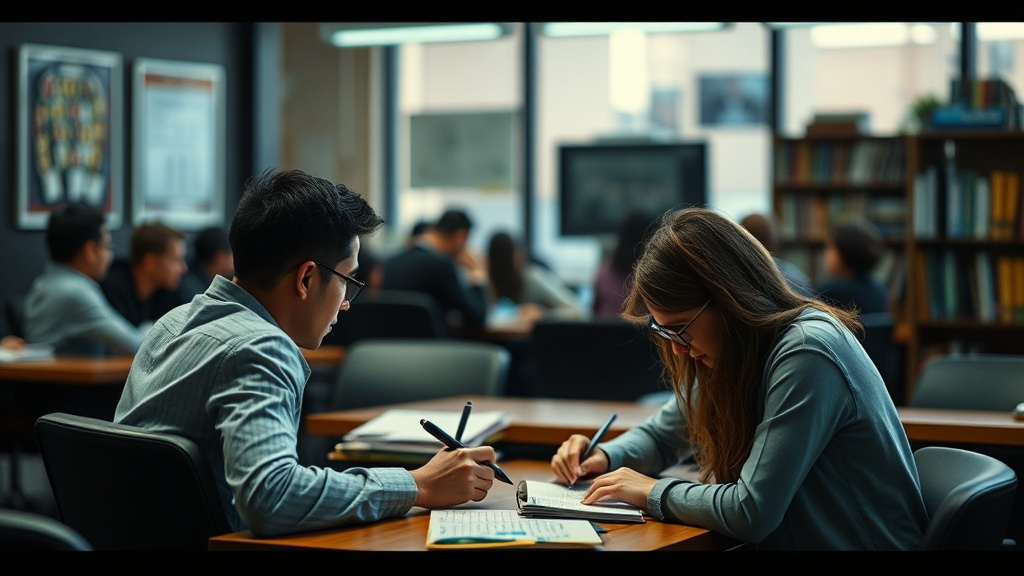
Using Active Recall to Stop Rereading Your Notes

A student sits in the library at 11:00 PM, eyes blurring as they read the same paragraph for the fifth time. They highlight the text in bright yellow, then neon green, feeling like they're actually studying. But when the exam starts the next morning, they stare at the first question and realize they don't actually know the answer—they just recognized the shape of the words on the page. This is the trap of passive review, and it's why most students feel like they're working hard without seeing the results.
This post breaks down how to switch from passive rereading to active recall. We'll look at why your brain ignores information when it feels too familiar and how to use specific techniques to make your study sessions actually stick.
What is Active Recall?
Active recall is the process of forcing your brain to retrieve information from memory without looking at your notes. Instead of putting information into your brain through reading, you are practicing pulling it out. It's the difference between looking at a map and actually knowing the way home.
Most students default to rereading because it feels easy. It’s a low-effort way to feel productive. When you reread a chapter, the information looks familiar, which your brain mistakes for mastery. This is a psychological phenomenon known as the "illusion of competence." You aren't learning; you're just getting better at recognizing patterns.
To move past this, you have to embrace the discomfort of the blank page. If it feels hard, it's probably working. If it feels easy, you're likely just performing passive recognition. This is why many high-achievers find themselves hitting a wall—they've spent years perfecting the art of rereading instead of the art of retrieving.
Active recall is a principle of learning that involves testing the much-needed memory of a person.
How Do I Use Active Recall for Exams?
You can use active recall by using tools like flashcards, practice tests, or even just a blank sheet of paper. The goal is to create a situation where you have to generate an answer from scratch rather than just recognizing one.
Here are the three most effective methods to implement right now:
- The Blurting Method: Read a page of your textbook or notes once. Close the book. Grab a blank sheet of paper and write down everything you can remember. Then—and this is the part people skip—open the book and see what you missed. The gaps in your "blurt" are exactly what you need to study.
- The Feynman Technique: Pretend you are explaining the concept to a six-year-old. If you hit a point where you can't explain a term without using jargon, you don't actually understand it. You're just using big words to hide a gap in your knowledge.
- Flashcard Systems: Use digital tools like Anki or physical cards to test yourself. The key isn't just making the cards, but the discipline of reviewing them when you're about to forget.
It’s easy to fall back into old habits when you're tired. If you find yourself drifting back into passive reading, stop. It's better to spend 20 minutes struggling to remember a concept than 2 hours "reviewing" it while your brain is essentially off-duty.
Why Rereading Is Not Studying
Rereading fails because it lacks the "desirable difficulty" required for long-term memory encoding. When you read a sentence, your brain recognizes the sequence of words, but it doesn't build a deep neural pathway. It’s a superficial interaction.
Think of it like a gym workout. Rereading is like watching a video of someone lifting weights. You might understand the movement, but your muscles aren't actually growing. Active recall is the actual lift. It’s heavy, it’s awkward, and it’s frustrating, but it’s the only way to build strength.
If you feel like your high GPA might be a false sense of security, it’s likely because your study methods are too passive. You're scoring well on practice quizzes because the questions look familiar, but you'll struggle when the context changes in a real exam. This is a common issue in subjects that require deep application rather than just rote memorization.
Compare the two methods below to see the difference in how they impact your brain:
| Feature | Passive Rereading | Active Recall |
|---|---|---|
| Mental Effort | Low (Feels easy) | High (Feels difficult) |
| Memory Type | Recognition | Retrieval |
| Long-term Retention | Short-term/Weak | Long-term/Strong |
| Typical Result | Illusion of mastery | Actual mastery |
Can I Use Digital Tools for Active Recall?
Yes, digital tools are incredibly effective as long as you use them for testing rather than just reading. Many students use apps to organize their lives, but they often forget to use them to challenge their brains.
If you want to try this, look into these specific options:
- Anki: This is the gold standard for medical and language students. It uses a Spaced Repetition System (SRS) to show you flashcards right before you're likely to forget them.
- Quizlet: Great for more casual study sessions, though be careful not to just play the "Match" games—that's still just recognition.
- Notion: You can use Notion to build "toggle" lists. Write a question, then hide the answer under a toggle. Test yourself by clicking the toggle only after you've said the answer out loud.
The catch? These tools are only as good as the questions you write. If your flashcards are too easy or too vague, you're just practicing being fast, not being smart. Make sure your prompts actually require a deep thought process.
Don't let your tools become a crutch. A beautiful Notion setup or a perfectly organized Anki deck is useless if you aren't actually performing the mental heavy lifting. You might find that procrastinating on the actual testing is your biggest hurdle—it's much more fun to organize a deck than it is to actually use it.
The transition from passive to active isn't overnight. You'll probably feel a bit slower at first. You'll feel like you're "bad" at studying because you're constantly hitting walls of things you don't know. That's actually a good thing. It means you're finally finding the edges of your knowledge and working to expand them.
Stop highlighting. Start questioning. Your future self during finals week will thank you.
Steps
- 1
Close the book and summarize
- 2
Create flashcards with specific questions
- 3
Practice spaced repetition